History

The John Adams Institute for Accelerator Science (JAI) was created in October 2004 in response to an initiative by the Particle Physics and Astronomy Research Council (PPARC) and the Council for the Central Laboratory for the Research Councils (CCLRC) to foster accelerator research and development (R&D) in the universities. PPARC and the CCLRC have since merged into the Science and Technology Research Council (STFC).

The JAI was initially a joint venture between the Departments of Physics in the University of Oxford and Royal Holloway University of London, with Imperial College London joining in 2011.

The JAI is physically located in the Denys Wilkinson Building (part of the Physics Department) at Oxford, in the Wilson Building (part of the Physics Department) at Royal Holloway and in the Blackett Laboratory building of Imperial College.

The Cockcroft Institute, a similar joint venture between the Universities of Lancaster, Liverpool and Manchester based at the Daresbury Laboratory in Cheshire, was created at the same time.

These two institutes, together with the STFC Accelerator Science and Technology Centre (also at Daresbury), form the core of accelerator R&D and training in the UK.

The genesis of the UK accelerator centres was an initiative in 1999 to rejuvenate accelerator R&D in the UK. Two programmes formed the core of the original programme of the Institute - one for a future Linear Electron-Positron Collider and the other for a possible Neutrino Factory. Since then, research has expanded considerably, with advanced light sources, plasma-driven accelerators and accelerators for medical applications now among the topics studied. A key strength of the Institute lies in advanced beam instrumentation and diagnostics that enable accelerator techniques and plasma acceleration.

The JAI was proposed initially by Professor Brian Foster (Oxford) and Professor Mike Green (Royal Holloway), with Brian appointed as the interim Director. In 2005, Professor Ken Peach was appointed Director and Professor Grahame Blair was appointed Deputy Director. In August 2010, Professor Andrei Seryi succeeded Ken Peach as Director. After a successful period in charge of the JAI, Professor Seryi was succeeded by the current director, Professor Philip Burrows of Oxford University.


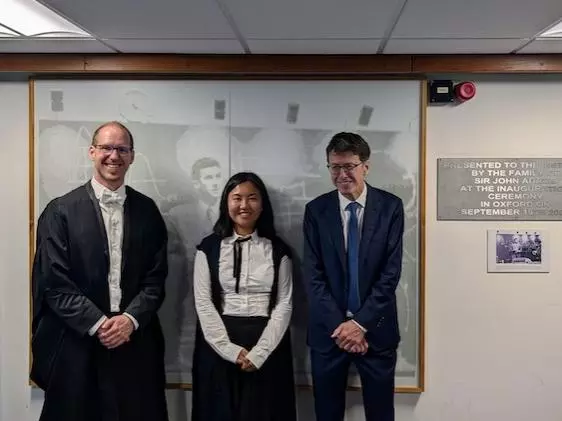
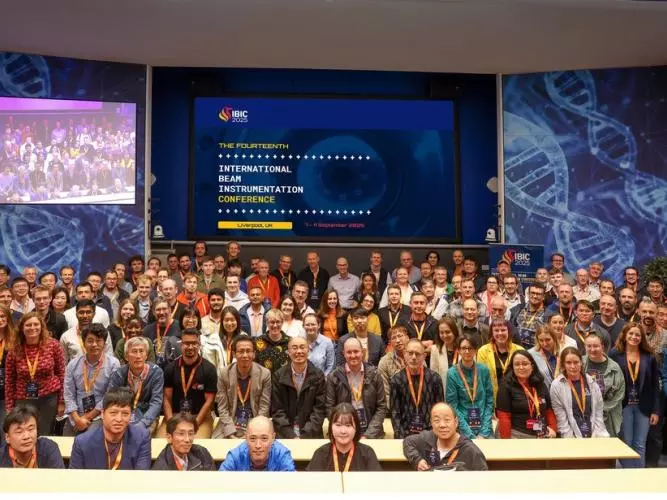
                On the image above - JAI opening in Oxford
Latest news

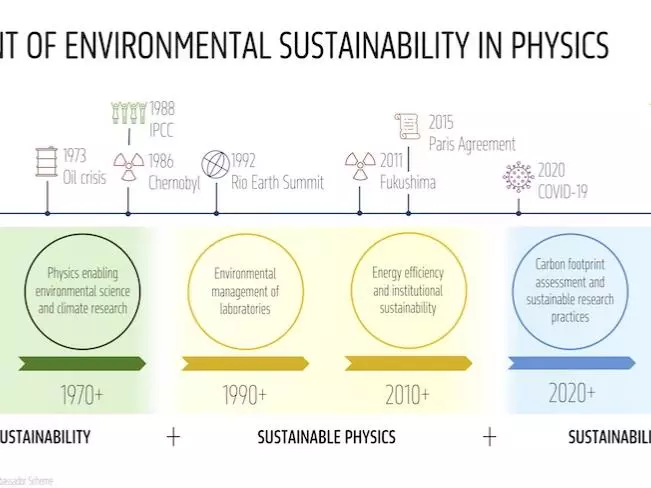
A visual timeline of the intersection of particle accelerators and sustainability.

JAI sustainability research featured in Physics World

"Big science seeks big wins from sustainability efforts"
Seb Wilkes and Prof. Adrian Oeftiger standing, smiling in formalwear

PhD Success!

Seb Wilkes successfully defends thesis
Francesco and Meg

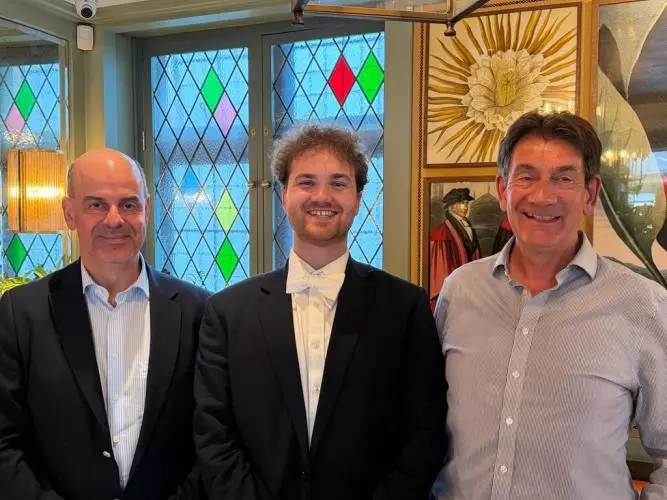
Two winners of the 2026 John Adams Prize!

Meg Savage and Francesco Straniero
HALHF@CLARA scientists in the control room of the CLARA test facility

HALHF recognised for its disruptive technology

Physics World Editors Choice
Adrian Oeftiger, Sasha Horney and Examiner

PhD Success!

Sasha Horney successfully defends thesis
Linear accelerator at cern

Boosting cancer treatment

Advancing the clinical implementation of FLASH radiotherapy
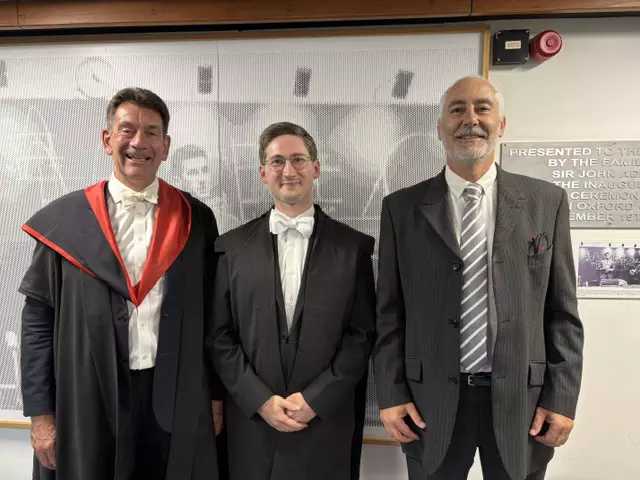
Emmanuel Tsesmelis (examiner), John (Jack) Salvesen, and Philip Burrows (supervisor)

PhD Success!

John Salvesen successfully defends thesis
David Posthuma De Boer after his viva

PhD Success!

David Posthuma De Boer successfully defends thesis
Philip Burrows smiling with Physics Matters

Prof. Philip Burrows at the Parliamentary Links Day

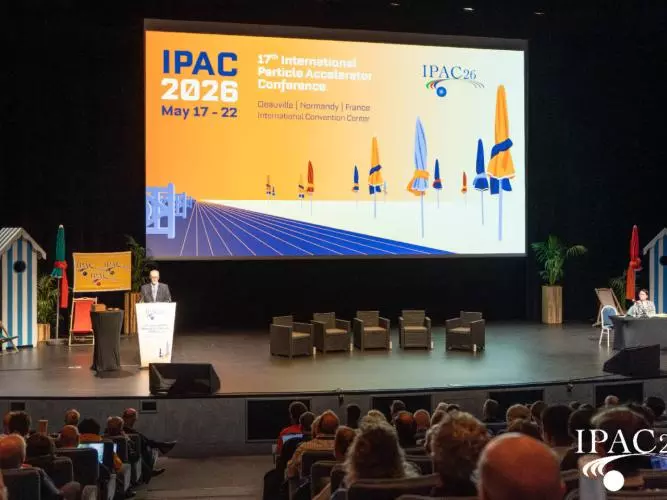
Ipac26 Opening Stage 2026 05 18 Deauville

The JAI attends IPAC 2026 in Deauville, France

A photo of the JAI AB members and attendees in Jesus College Quad

JAI Advisory Board 2026

Success at the JAI Advisory Board meeting!
EPITA logo placeholder

EPITA project gains EU-funding!

The EPITA project will address technological and sustainability challenges.
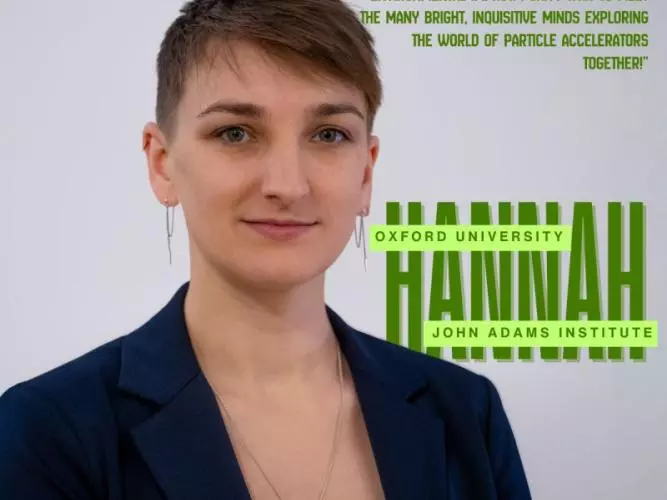
Dr. Hannah Wakeling with text: "I'm looking forward to talking about the brilliant work we are doing as a community to reduce environmental impact. I can't wait to meet the many bright, inquisitive minds exploring the world of accelerators together".

Hannah Wakeling appointed IUPAP Accelerator Ambassador

Congratulations on the appointment as an IUPAP Accelerator Ambassador
philip burrows 001 min

Professor Burrows to head CERN Scientific Policy Committee

A photo of Prof. Alexander Gerbershagen

Welcome to the JAI!

Professor Alexander Gerbershagen appointed to a faculty position at the JAI, Oxford
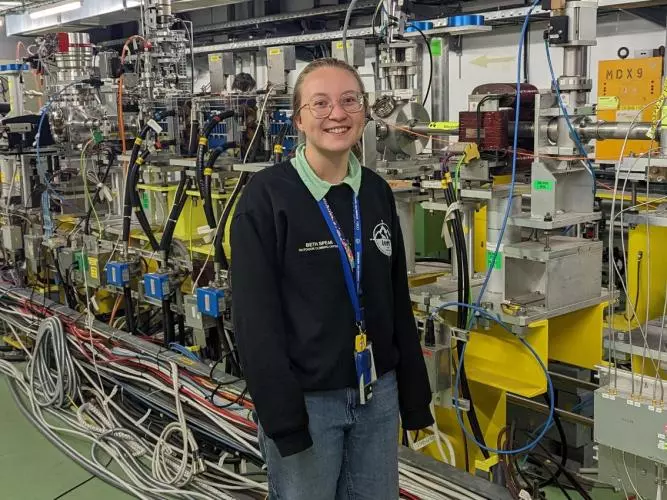
A photo of Bethany Spear

PhD Success!

Bethany Spear successfully defends thesis
philip burrows 001 min

Physics Briefing Book Input

Philip Burrows contributed to the input for the 2026 update of the European Strategy for Particle Physics as Accelerator Science and Technology Convenor
A photo of William Shields

William Shields appointed Lecturer in Accelerator Physics

Congratulations to the newly appointed Lecturer in the JAI at Royal Holloway, University of London
NRP sustainability guidelines

Hannah Wakeling and Philip Burrows publish on sustainability in Nature Reviews Physics

Including a call to action for, and exhibition of, community specific guidelines
IBIC 2025 Group Photo

IBIC2025

Members of the JAI attend IBIC2025 in Liverpool
PABG 2025 Cohort

The Particle Accelerators and Beams Conference 2025

Hosted jointly by the Diamond Light Source, ISIS Neutron and Muon Source and the John Adams Institute, University of Oxford
CERN student visit 2025

JAI Student Visit to CERN 2025

JAI first-year graduate students visit after their design project for HALHF
The APPEAL 2025 cohort

Accelerator & Particle Physics Education at A-Level (APPEAL) 2025

A day for A-level teachers to learn about particle accelerators!
Jack Salvesen presenting at IPAC 2025

Jack Salvesen presents at IPAC 2025

As recipient of the student grant, he presented on Student Perspectives on Career Pathways